How do I know if i have endometriosis?
Endometriosis is a common condition affecting 1 in 10 women. And up to 50% of those with presenting with infertility. Click this link for a downloadable patient information leaflet
Navigating the process of obtaining a working visa in Australia can be daunting. In this blog, we'll simplify the steps and key requirements, guiding you toward making your Australian work dreams come true.

There are many benefits to private obstetrics, the main one being continuity of care under the direct management of a single and experienced clinician. This is opposed to the public system where you may see multiple midwives and doctors, and you may be under care with medical / nursing trainees of varying experience.
The obvious downside to private care is the out-of-pocket cost (which may be around $2000 with insurance or up to $8000 without). However, this is a decision that may affect you and your child’s future health. And if you compare it to some of life’s other big expenses (like a car or holiday), it may be a decision worth considering.
Having said that, we are very fortunate to live in a country that offers free public healthcare that is a great option for many patients. Labour is a natural process meaning that most women have uncomplicated pregnancies and deliveries. Unfortunately, it doesn’t always go to plan and sometimes complex and urgent intervention is required to avoid unexpected and at times tragic outcomes. In these highly stressful times, it can be reassuring to know (and trust) the obstetrician caring for you.
The opinions of family, friends, others and online research are significant factors that may influence a woman’s decision on public or private care.
It is important to recognise people’s opinions (including ours!) will be biased by personal or political views, and past experiences. This is especially true for a lot of online information, and I suggest that you should always be very wary of anyone who talks in absolutes !
In this article we will try our best to provide a subjective view on the main differences between private and public obstetric care.
With private pregnancy care you will see the same obstetrician for all of your visits. This allows you, and your partner to form a bond and trust with the person who will be responsible for the safe birth of your baby.
As a clinician, knowing your patient enables you to recognise changes (sometimes subtle) when they occur. This can lead to early detection, monitoring and interventions that may improve clinical outcomes.
In the public sector, you will often see a different clinician at each visit, and these visits may be few and far between. This can make it hard to establish a relationship and recognise changes or complications when they occur. A potential benefit is that you receive multiple different opinions on your care, however this can also be confusing and frustrating for patients.
Most public hospitals offer midwifery programs where you are assigned to a small team of midwives who will also deliver your baby. This promotes continuity of nursing care but is generally limited to low risk women. Also you may be delivered by a member of their team rather than a specific midwife.

In order to work privately, an obstetrician must have completed their specialty training and be deemed fully independent. This usually means they have spent over 10 years working as a medical doctor. During their training, most obstetricians would have delivered over a thousand babies and gained extensive experience dealing with various obstetric emergencies.
Conversely, in the public hospital you often have no say in who you see. You may see a midwife or doctor in their first year of training, or you may see someone very experienced. Usually, the senior staff act in an overseeing role where they are only involved in event of complications. The level of supervision (of junior trainees) varies greatly between hospitals.
Both public and private hospitals provide 24 hour access to maternity care. One key difference with private obstetrics is that you have 24/7 access to your private obstetrician for phone or in-person advice. And you can book appointments as you need them, with flexibility to work around your personal schedule.
Depending on your location, certain hospitals may only have capacity to care for women beyond a certain gestation (e.g. >32 weeks at Buderim Private Hospital). If you deliver before this, you may need to be transferred to another private or public hospital, often in a large city.
Public hospitals deal with a huge number of patients and need to consider the economical costs of healthcare. For this reason, pregnant women are often stratified as low or high risk, and this may dictate the level of monitoring they receive. Unfortunately, antenatal complications can develop even in low risk patients. One of the most common of these is growth restriction – which remains one of the leading causes for stillbirth.
Ultrasound is a fantastic tool for monitoring the growth of your baby and the majority of private obstetricians will scan your baby at each visit, tracking growth throughout the pregnancy. In the public system you will have an ultrasound only at 12 weeks (the nuchal scan) and 20 weeks (the morphology scan). After 20 weeks you will only have a scan if clinically indicated.

In a private hospital you will have your own room where your partner can stay with you and your newborn baby. You will be cared for by your private obstetrician, in addition to hospital midwives, paediatricians and allied health staff. There is no pressure on length of stay and you will be able to go home when you feel comfortable and confident. This may be early (within a few days) or late spending on your personal situation. After discharge you will be closely followed up by your obstetrician.
In public hospitals there is often bed shortages and pressure to discharge patients as soon as it is safe to do so. Postnatal wards vary between public hospitals but often have 2 and 4 bed bays and partners cannot stay overnight. After discharge you will rarely see a doctor and follow up will be with midwives and your GP.
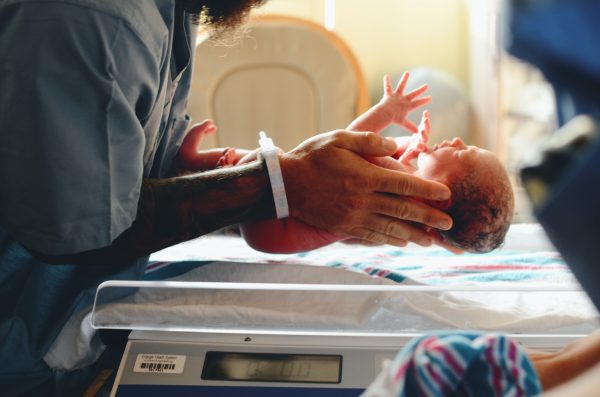
Private obstetric fees vary greatly between doctors, and whether or not you have private health insurance. At Coastal O&G you can expect to be about $2000 out of pocket with insurance, and around $8000 if you do not have insurance. This may vary depending on your individual situation.
Many private clinics offer varying models of care to reduce costs for patients. One example is joint care with a public hospital, where you have most of your antenatal care with a private obstetrician but then deliver at a public hospital.
Full public care has no out of pocket costs and this is the major advantage of going publicly.

At Coastal O&G you will see your obstetrician for all antenatal visits at our practice in Maroochydore. At each visit you will have an ultrasound to check on the growth and wellbeing of your baby, as well as 3D and 4D images for your enjoyment. On one or two occasions you will have a consultation with the other obstetrician (Ben or Rob) so you can meet and get to know them. We do not share on-call with any other doctors so you are guaranteed to be delivered by an obstetrician you know!
During your pregnancy you will be cared for by a close knit team of midwives, nurses, allied health staff and doctors. You will have ample time to ask questions, discuss concerns and receive education to prepare you not only for labour, but also the exciting time after. You will have contact details for 24/7 pregnancy advice. If you would like to find out more about pregnancy care at Coastal O&G, visit our website or contact our clinic today.
Endometriosis is a common condition affecting 1 in 10 women. And up to 50% of those with presenting with infertility. Click this link for a downloadable patient information leaflet
Unfortunately for some, falling pregnant can be very difficult and a highly stressful time. Understanding ovulation and your ‘fertile window’ (the time period that you can spontaneously conceive) may help you to fall pregnant.
Important announcement regarding patients and Covid-19 vaccination requirements.
Choosing the right obstetrician is about more than credentials — it’s about finding someone whose expertise, approach, and communication style suit your needs. Ask yourself these five key...
Many cultures expect women to continue working during pregnancy, and it's often possible to do so with a few adjustments. Here are practical strategies to help you manage symptoms and remain...
Many men show no symptoms—but these two issues often go undetected until a fertility assessment...
With the journey of fertility & IVF an often complex and daunting one, knowing what’s right and what’s wrong in preparation for your treatment is key to ensuring you get the best outcome.
We’ve been ranked Queensland’s most successful clinic for women under 35.
Infertility affects 1 in 6 couples and often brings multiple, hidden losses—making it one of life’s most profound emotional challenges.
The 2 week wait between treatment and testing for a successful conception can be a stressful time.
Men who watch television for 20 hours per week have almost half the sperm count of those who watch very little television or none at all, according to a study published by The British Journal of Sports Medicine.
Please note that you require a referral from your GP to one of our doctors in order to access Medicare rebates.
"*" indicates required fields
Endometriosis is a common condition affecting 1 in 10 women. And up to 50% of those with presenting with infertility. Click this link for a downloadable patient information leaflet

Endometriosis occurs when endometrial cells (that normally line the womb) grow outside of the uterus for example on the ovaries or bowel. The condition is more common in older women or those who have not yet had pregnancies. The use of the oral contraceptive pill is protective against endometriosis.
Endometriosis affects fertility in a number of ways including egg development, ovulation, fertilisation and implantation. If identified, endometriosis can be treated (both surgically and medically) to improve pregnancy rates from spontaneous conception or via assisted reproduction (e.g. ovulation induction or IVF).
Aside from fertility issues, endometriosis may cause pelvic pain (often related with periods or intercourse), or some women may have no symptoms at all.
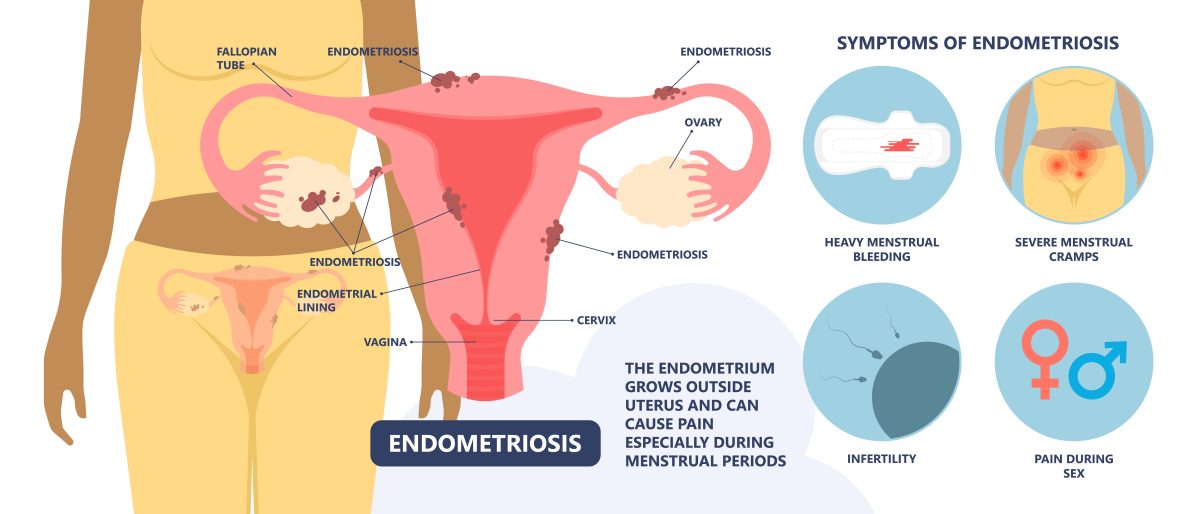
Fortunately many women with endometriosis do not experience the classical symptom of period pain. Unfortunately, this makes predicting and diagnosing endometriosis very difficult.
Studies have shown that up to 50% of women presenting with unexplained fertility issues are subsequently found to have endometriosis.
The only way to diagnose (or exclude) endometriosis is via a keyhole surgery known as a ‘laparoscopy.’ This is a day procedure where we are able to directly visualise the presence, location and severity of your disease. At the same time it can be treated by burning or excising the endometriosis.

Endometrial cells grow under the influence of the hormone oestrogen – that is produced by your ovaries. So the main principle behind treatment is suppressing oestrogen production and using progestogens that shrink and breakdown endometrial cells.
Like all things, treatment depends on your individualised clinical situation and desired outcomes. It may range from simple pain relief strategies to hormonal therapies or surgical ablation or excision. It is important to recognise that repeat surgeries are not always beneficial as this is a hormonal disease!
At Coastal IVF we believe strongly in diagnosing and treating endometriosis prior to assisted reproduction, usually with a combination of surgery and medical therapy. We have found this gives our patients the best chances to conceive, often without the need for IVF!

If you suffer from, or suspect you may have endometriosis, come and see one of our doctors today. If you would like more information from trusted resources, follow the links below:
Coastal IVF – Patient Information Brochure on Endometriosis
Endometriosis Australia – https://www.endometriosisaustralia.org/
Jean Hailes Website for Women’s Health: Endometriosis –
Navigating the process of obtaining a working visa in Australia can be daunting. In this blog, we'll simplify the steps and key requirements, guiding you toward making your Australian work dreams come true.
Unfortunately for some, falling pregnant can be very difficult and a highly stressful time. Understanding ovulation and your ‘fertile window’ (the time period that you can spontaneously conceive) may help you to fall pregnant.
Important announcement regarding patients and Covid-19 vaccination requirements.
Choosing the right obstetrician is about more than credentials — it’s about finding someone whose expertise, approach, and communication style suit your needs. Ask yourself these five key...
Many cultures expect women to continue working during pregnancy, and it's often possible to do so with a few adjustments. Here are practical strategies to help you manage symptoms and remain...
Many men show no symptoms—but these two issues often go undetected until a fertility assessment...
With the journey of fertility & IVF an often complex and daunting one, knowing what’s right and what’s wrong in preparation for your treatment is key to ensuring you get the best outcome.
We’ve been ranked Queensland’s most successful clinic for women under 35.
Infertility affects 1 in 6 couples and often brings multiple, hidden losses—making it one of life’s most profound emotional challenges.
The 2 week wait between treatment and testing for a successful conception can be a stressful time.
Men who watch television for 20 hours per week have almost half the sperm count of those who watch very little television or none at all, according to a study published by The British Journal of Sports Medicine.
Please note that you require a referral from your GP to one of our doctors in order to access Medicare rebates.
"*" indicates required fields
Unfortunately for some, falling pregnant can be very difficult and a highly stressful time. Understanding ovulation and your ‘fertile window’ (the time period that you can spontaneously conceive) may help you to fall pregnant.

Unfortunately for some, falling pregnant can be very difficult and a highly stressful time.
Understanding ovulation and your ‘fertile window’ (the time period that you can spontaneously conceive) may help you to fall pregnant.
It is estimated that around 10-20% of couples will not conceive after 12 months of trying. Majority of these couples will have identifiable causes for their impaired or “sub-fertility”. With a proper diagnostic workup these causes may be identified and treated – most of the time without the need for IVF!
Sperm can be found in the fallopian tube (the site of fertilisation) as early as 5 minutes after intercourse and can survive there for up to 5 days!
An egg on other hand can only be fertilised for 12-24 hours after ovulation (the release of the egg from the ovary)
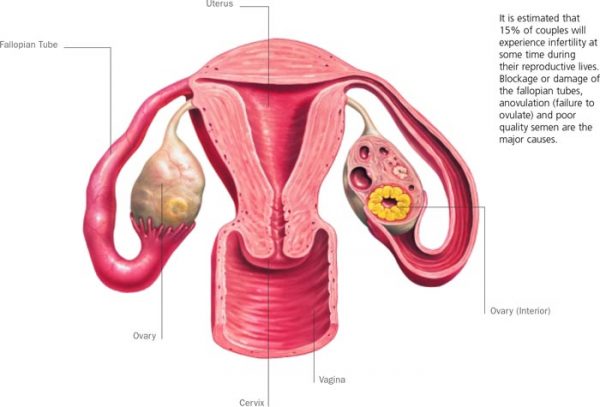
The fertile window begins 5 days prior to ovulation and ends the day after.
However, the highest pregnancy rates (~30-35% chance) occur when intercourse happens 1-2 days before, or on the day of ovulation.
Intercourse at this time results in the greatest number of viable sperm present in the fallopian tube.
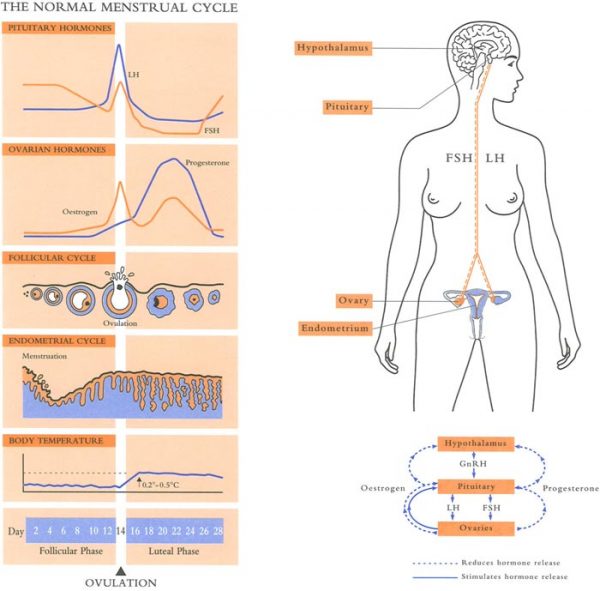
Follow these links for more information on Understanding Your Menstrual Cycle and Knowing Your Fertile Window
Navigating the process of obtaining a working visa in Australia can be daunting. In this blog, we'll simplify the steps and key requirements, guiding you toward making your Australian work dreams come true.
Endometriosis is a common condition affecting 1 in 10 women. And up to 50% of those with presenting with infertility. Click this link for a downloadable patient information leaflet
Important announcement regarding patients and Covid-19 vaccination requirements.
Choosing the right obstetrician is about more than credentials — it’s about finding someone whose expertise, approach, and communication style suit your needs. Ask yourself these five key...
Many cultures expect women to continue working during pregnancy, and it's often possible to do so with a few adjustments. Here are practical strategies to help you manage symptoms and remain...
Many men show no symptoms—but these two issues often go undetected until a fertility assessment...
With the journey of fertility & IVF an often complex and daunting one, knowing what’s right and what’s wrong in preparation for your treatment is key to ensuring you get the best outcome.
We’ve been ranked Queensland’s most successful clinic for women under 35.
Infertility affects 1 in 6 couples and often brings multiple, hidden losses—making it one of life’s most profound emotional challenges.
The 2 week wait between treatment and testing for a successful conception can be a stressful time.
Men who watch television for 20 hours per week have almost half the sperm count of those who watch very little television or none at all, according to a study published by The British Journal of Sports Medicine.
Please note that you require a referral from your GP to one of our doctors in order to access Medicare rebates.
"*" indicates required fields
Important announcement regarding patients and Covid-19 vaccination requirements.

1st April 2022
At Coastal IVF we have recommended that all patients undergo Covid-19 immunisation to protect against serious short-term and long-term complications (particularly for those patients contemplating pregnancy).
Over the past 6 months, there have been significant changes in immunisation rates in Queensland – plus we are now aware of the endemic frequency and exposure rates to Covid-19 in the general community. As a result, while we maintain a strong recommendation for immunisation, I have decided that as from April 1 2022, there will not be a mandatory requirement for Covid-19 immunisation to attend and undergo treatment at CIVF.
Patients should be mindful that attendance at some hospitals still requires positive immunisation status. If you are symptomatic, please do not attend the clinic until you undergo Covid-19 screening to minimise any risks to other patients.
We thank all patients for their understanding through the period of the pandemic.
Kind regards,
Dr Paul A Stokes

Navigating the process of obtaining a working visa in Australia can be daunting. In this blog, we'll simplify the steps and key requirements, guiding you toward making your Australian work dreams come true.
Endometriosis is a common condition affecting 1 in 10 women. And up to 50% of those with presenting with infertility. Click this link for a downloadable patient information leaflet
Unfortunately for some, falling pregnant can be very difficult and a highly stressful time. Understanding ovulation and your ‘fertile window’ (the time period that you can spontaneously conceive) may help you to fall pregnant.
Choosing the right obstetrician is about more than credentials — it’s about finding someone whose expertise, approach, and communication style suit your needs. Ask yourself these five key...
Many cultures expect women to continue working during pregnancy, and it's often possible to do so with a few adjustments. Here are practical strategies to help you manage symptoms and remain...
Many men show no symptoms—but these two issues often go undetected until a fertility assessment...
With the journey of fertility & IVF an often complex and daunting one, knowing what’s right and what’s wrong in preparation for your treatment is key to ensuring you get the best outcome.
We’ve been ranked Queensland’s most successful clinic for women under 35.
Infertility affects 1 in 6 couples and often brings multiple, hidden losses—making it one of life’s most profound emotional challenges.
The 2 week wait between treatment and testing for a successful conception can be a stressful time.
Men who watch television for 20 hours per week have almost half the sperm count of those who watch very little television or none at all, according to a study published by The British Journal of Sports Medicine.
Please note that you require a referral from your GP to one of our doctors in order to access Medicare rebates.
"*" indicates required fields
Choosing the right obstetrician is about more than credentials — it’s about finding someone whose expertise, approach, and communication style suit your needs. Ask yourself these five key...

Do you have any chronic illnesses – such as high blood pressure, epilepsy, heart disease, or diabetes – or previous complications that may require special care? If so, ask the obstetrician you’re considering what experience they have caring for patients like you, and consider whether you should be cared for by a perinatologist (a doctor who specializes in high-risk births). If you’ve previously had a c-section, would you like to try to have a vaginal birth this time? In that case, you’ll want to make sure that both the provider and the hospital are supportive of vaginal birth after cesarean.
Find out the doctor’s attitude about issues that may be important to you, such as the routine use of interventions like IVs, continuous electronic fetal monitoring, and episiotomy. You can’t predict what your individual situation will require, but you can get an idea of the general approach to care and practice patterns from the doctor’s responses to these questions.
Your birth is your experience. Finding a doctor and team that supports and respects your wishes for birth is important to making the most of your pregnancy experience.
Pregnancy and childbirth are exciting, but they can also be stressful. So the best healthcare partner is one you feel comfortable with and can communicate with easily. It helps to ask yourself questions like these:
And most importantly you need to ensure that you are getting the best Sunshine Coast Obstetrician for you and your baby. An OB is not there as a friend but as a medical practitioner who looks after the best interests of you and your baby. The team at Sunshine Coast Coastal IVF believe that we fulfill these services as a highly reputable gynecologist, obstetrician and fertility specialist team which consists of Dr Paul Stokes, Obstetrician – Dr Rob North, and his specialist nurse, clinical director, fitness instructor and online private facebook group to support patients of all levels.
If you are looking for private obstetric services or for a specialist team for the best care, make an appointment to meet our team!
Navigating the process of obtaining a working visa in Australia can be daunting. In this blog, we'll simplify the steps and key requirements, guiding you toward making your Australian work dreams come true.
Endometriosis is a common condition affecting 1 in 10 women. And up to 50% of those with presenting with infertility. Click this link for a downloadable patient information leaflet
Unfortunately for some, falling pregnant can be very difficult and a highly stressful time. Understanding ovulation and your ‘fertile window’ (the time period that you can spontaneously conceive) may help you to fall pregnant.
Important announcement regarding patients and Covid-19 vaccination requirements.
Many cultures expect women to continue working during pregnancy, and it's often possible to do so with a few adjustments. Here are practical strategies to help you manage symptoms and remain...
Many men show no symptoms—but these two issues often go undetected until a fertility assessment...
With the journey of fertility & IVF an often complex and daunting one, knowing what’s right and what’s wrong in preparation for your treatment is key to ensuring you get the best outcome.
We’ve been ranked Queensland’s most successful clinic for women under 35.
Infertility affects 1 in 6 couples and often brings multiple, hidden losses—making it one of life’s most profound emotional challenges.
The 2 week wait between treatment and testing for a successful conception can be a stressful time.
Men who watch television for 20 hours per week have almost half the sperm count of those who watch very little television or none at all, according to a study published by The British Journal of Sports Medicine.
Please note that you require a referral from your GP to one of our doctors in order to access Medicare rebates.
"*" indicates required fields
Many cultures expect women to continue working during pregnancy, and it's often possible to do so with a few adjustments. Here are practical strategies to help you manage symptoms and remain...

Different cultures have different expectations on the mother-to-be and whether they should continue to work. If you work in a culture that requires you to continue to work, knowing how to best manage symptoms and stay healthy while getting the job done will make your pregnancy that much more pleasant. In most cases women can work throughout their pregnancy. Being pregnant, can present challenges in your workplace therefore it is important to stay healthy so you can continue to be productive on the job. It is also necessary to know when enough is enough and that you can be risking your pregnancy.
It might be called “morning” sickness, but pregnancy nausea and sickness can hit at any time. To ease nausea try the following: Avoid nausea triggers. Snack often. Drink plenty of fluids.
During pregnancy, particularly during the first trimester you can feel overwhelmingly tired. It is important to rest when you can and don’t take on extra work as it leads to extra pressure and stress. Try the following: Eat foods rich in iron and protein. Try foods such as red meat, poultry, seafood, leafy green vegetables, iron-fortified whole-grain cereal and beans. Take short, frequent breaks. Getting up and moving around for a few minutes can reinvigorate you.
Scaling back can help you get more rest when your workday ends. Keep up your fitness routine. Although exercise might be the last thing on your mind, taking a brisk walk or a pregnancy fitness class can help boost your energy levels. It is important that your Doctor says it’s ok to exercise.
Aim for 7 to 9 hours of sleep every night. Sleep or rest on your side will improve blood flow to your baby and help prevent swelling. For added comfort try placing pillows between your legs and under your belly.
For private obstetric care on the Sunshine Coast contact the Coastal IVF team on 07 5443 4301
Navigating the process of obtaining a working visa in Australia can be daunting. In this blog, we'll simplify the steps and key requirements, guiding you toward making your Australian work dreams come true.
Endometriosis is a common condition affecting 1 in 10 women. And up to 50% of those with presenting with infertility. Click this link for a downloadable patient information leaflet
Unfortunately for some, falling pregnant can be very difficult and a highly stressful time. Understanding ovulation and your ‘fertile window’ (the time period that you can spontaneously conceive) may help you to fall pregnant.
Important announcement regarding patients and Covid-19 vaccination requirements.
Choosing the right obstetrician is about more than credentials — it’s about finding someone whose expertise, approach, and communication style suit your needs. Ask yourself these five key...
Many men show no symptoms—but these two issues often go undetected until a fertility assessment...
With the journey of fertility & IVF an often complex and daunting one, knowing what’s right and what’s wrong in preparation for your treatment is key to ensuring you get the best outcome.
We’ve been ranked Queensland’s most successful clinic for women under 35.
Infertility affects 1 in 6 couples and often brings multiple, hidden losses—making it one of life’s most profound emotional challenges.
The 2 week wait between treatment and testing for a successful conception can be a stressful time.
Men who watch television for 20 hours per week have almost half the sperm count of those who watch very little television or none at all, according to a study published by The British Journal of Sports Medicine.
Please note that you require a referral from your GP to one of our doctors in order to access Medicare rebates.
"*" indicates required fields